Comprehensive Guide to Sports Arena Acoustic Design: From Standards to Practical Implementation
Introduction: Why is Sports Arena Acoustic Design So Complex?
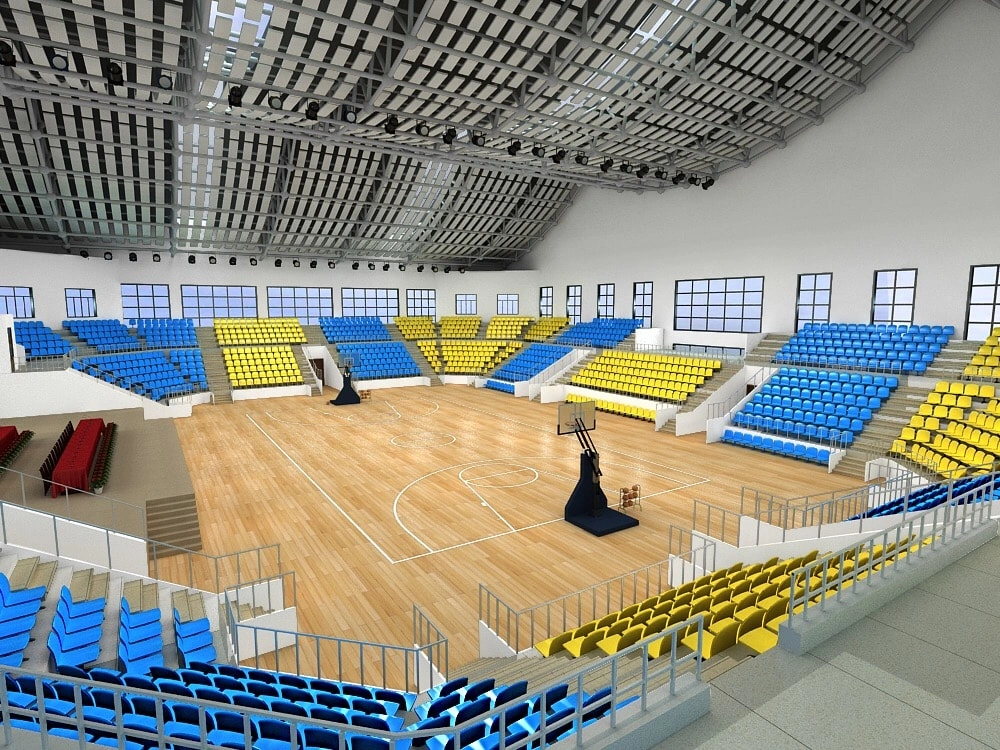
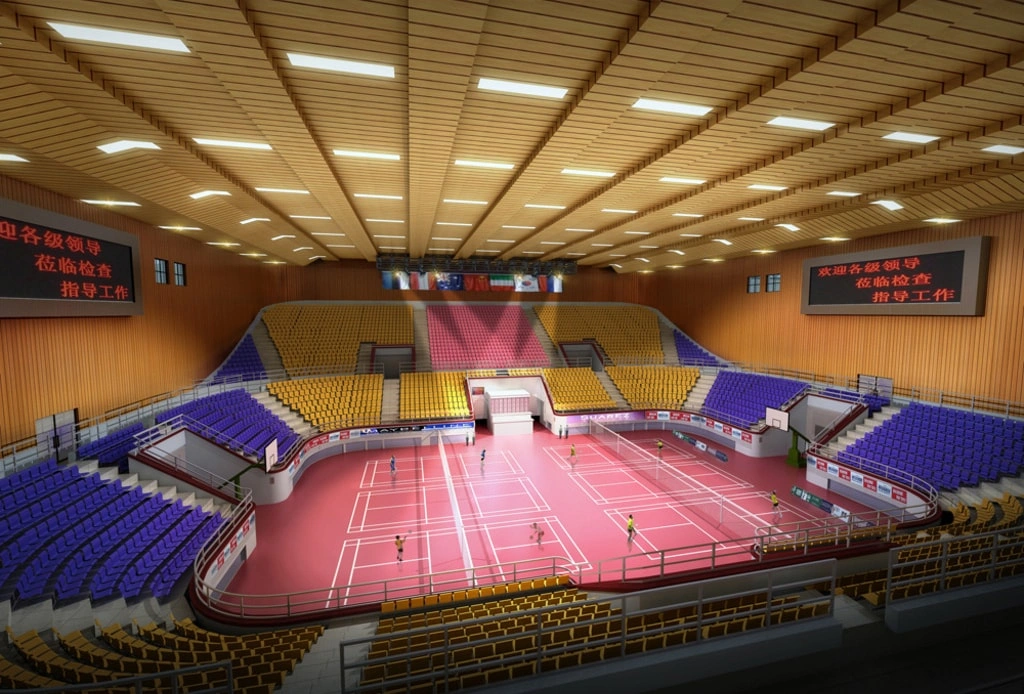
Sports arena acoustic design represents one of the most challenging disciplines in architectural acoustics. Unlike conventional spaces such as offices, conference rooms, or theaters, sports arenas feature massive spatial volumes, high sound energy density, and overlapping multi-source noise, making their acoustic environments far more complex than typical buildings.
This comprehensive guide examines the core principles, technical standards, key metrics, and implementation strategies for sports arena acoustic design from an engineering perspective, providing professional reference for architects, acoustic consultants, and related engineers.
Part One: Essential Understanding of Sports Arena Acoustic Design
1.1 Paradigm Shift in Core Philosophy
The fundamental goal of sports arena acoustic design is not “achieving silence,” but rather maintaining intelligibility and orderliness even under extremely noisy conditions. This philosophical shift determines the fundamental difference in design approach.
1.2 Six Inherent Challenges of Sports Arena Acoustics
In actual engineering practice, sports arena acoustic design faces the following unavoidable technical challenges:
Reverberation Control in Massive Volumes. Large sports arenas typically range from 15,000 to 50,000 cubic meters, with some international-class venues exceeding 100,000 cubic meters. Such enormous spatial volumes result in extremely long sound decay paths, naturally prolonged reverberation times, and exponentially increasing control difficulty.
Uncontrollable Sound Source Quantities. Sound sources within arenas include crowd noise, ball impact sounds, footsteps, equipment operation noise, and sound reinforcement systems. These various sources superimpose and reflect within the space, creating an extremely complex sound field environment.
Dramatic Usage State Variations. Arenas experience 3-5 times difference in absorption between empty and fully occupied states. Audiences themselves function both as sound sources and absorbers, creating significant design uncertainty through this dynamic variation.
Frequent Functional Mode Switching. Modern sports arenas often serve multiple functions, hosting sporting events, artistic performances, exhibitions, and other activities, each requiring distinctly different acoustic environments.
High Proportion of Hard Surfaces. Considering structural safety, durability, and economy, arenas extensively utilize concrete, steel structures, glass, and other hard materials with extremely high sound reflection coefficients, further exacerbating acoustic control difficulty.
Full-Coverage Sound Reinforcement Requirements. Arenas must ensure clear reception of amplified signals in every area, requiring architectural acoustic design to create favorable “usable sound fields” for electro-acoustic systems.
These six challenges determine that sports arena acoustics must employ systems engineering thinking rather than simple material accumulation.
Part Two: Sports Arena Acoustic Design Objective System
2.1 Six Core Performance Metrics
Professional sports arena acoustic design should simultaneously satisfy the following six technical indicators:
Reverberation Time Control (RT60). Reverberation time is the most fundamental metric for evaluating acoustic environments, directly affecting speech intelligibility and music quality.
Speech Intelligibility Assurance (STI). The Speech Transmission Index determines whether audiences can clearly understand broadcast content and referee instructions, representing one of the most critical functional indicators for sports arenas.
Echo and Sound Focusing Control. Acoustic defects in large spaces such as echoes, flutter echoes, and sound focusing phenomena must be completely eliminated during the design phase.
Orderly Management of Crowd Noise. Reasonable acoustic design suppresses disorderly superposition and reverberation accumulation of crowd noise.
Structural and Impact Noise Isolation. Control transmission of impact sounds from ball collisions, footsteps, and trampling to surrounding spaces.
Creating Usable Sound Fields for Electro-acoustic Systems. Provide quality acoustic environments with low reverberation and minimal reflections for sound reinforcement systems, ensuring full system performance.
Engineering practice demonstrates that projects satisfying only partial indicators while neglecting other aspects will inevitably expose problems during actual use.
2.2 Design Priority Ranking
Under resource constraints, allocate design resources according to the following priorities:
- Reverberation time control (affects all other indicators)
- Speech intelligibility assurance (core functional requirement)
- Acoustic defect elimination (avoid critical problems)
- Background noise control (basic environmental quality)
- Structural noise isolation (special functional needs)
- Sound quality optimization (advanced requirements)
Part Three: Applicable Standards and Regulatory Framework
3.1 Architectural Acoustics and Reverberation Control Standards
ISO 3382 Series Standards specify measurement methods and evaluation procedures for reverberation time in large spaces, representing internationally recognized authoritative standards.
ISO 23591 specifically provides acoustic design recommendations for sports facilities, covering acoustic requirements for different types of sports arenas.
GB 50118 “Code for Sound Insulation Design of Civil Buildings” provides basic sound insulation and sound absorption requirements for public buildings.
GB/T 50796 “Code for Design of Sports Buildings” includes fundamental provisions for sports arena acoustic design.
3.2 Speech Intelligibility and Sound Reinforcement System Standards
IEC 60268 Series Standards serve as international benchmarks for electro-acoustic system design, specifying performance requirements and testing methods for sound reinforcement systems.
ANSI S12 Series Standards provide architectural acoustic measurement and evaluation methods established by the Acoustical Society of America.
GB/T 14476 “Acoustic Characteristic Indices for Sound Reinforcement Systems in Auditoriums” clarifies technical indicators and measurement methods for sound reinforcement systems in China.
3.3 Structural Noise and Environmental Noise Standards
ISO 10140 specifies laboratory and field methods for measuring sound insulation of building elements and buildings.
GB 50087 “Code for Noise Control Design in Industrial Enterprises” can reference noise control design for sports arena mechanical and electrical equipment.
GB 3096 “Environmental Quality Standard for Noise” specifies environmental noise limit requirements.
3.4 Correct Understanding of Standards Usage
Standards represent “compliance tools” rather than “design substitutes.” Standards provide minimum requirements and basic frameworks; excellent acoustic design must innovate and optimize based on specific project characteristics while meeting standard requirements.
Part Four: Engineering-Grade Recommendations for Key Acoustic Metrics
Comprehensive Guide to Sports Arena Acoustic Design: From Standards to Practical Implementation
Introduction: Why is Sports Arena Acoustic Design So Complex?
Sports arena acoustic design represents one of the most challenging disciplines in architectural acoustics. Unlike conventional spaces such as offices, conference rooms, or theaters, sports arenas feature massive spatial volumes, high sound energy density, and overlapping multi-source noise, making their acoustic environments far more complex than typical buildings.
This comprehensive guide examines the core principles, technical standards, key metrics, and implementation strategies for sports arena acoustic design from an engineering perspective, providing professional reference for architects, acoustic consultants, and related engineers.
Part One: Essential Understanding of Sports Arena Acoustic Design
1.1 Paradigm Shift in Core Philosophy
The fundamental goal of sports arena acoustic design is not “achieving silence,” but rather maintaining intelligibility and orderliness even under extremely noisy conditions. This philosophical shift determines the fundamental difference in design approach.
1.2 Six Inherent Challenges of Sports Arena Acoustics
In actual engineering practice, sports arena acoustic design faces the following unavoidable technical challenges:
Reverberation Control in Massive Volumes. Large sports arenas typically range from 15,000 to 50,000 cubic meters, with some international-class venues exceeding 100,000 cubic meters. Such enormous spatial volumes result in extremely long sound decay paths, naturally prolonged reverberation times, and exponentially increasing control difficulty.
Uncontrollable Sound Source Quantities. Sound sources within arenas include crowd noise, ball impact sounds, footsteps, equipment operation noise, and sound reinforcement systems. These various sources superimpose and reflect within the space, creating an extremely complex sound field environment.
Dramatic Usage State Variations. Arenas experience 3-5 times difference in absorption between empty and fully occupied states. Audiences themselves function both as sound sources and absorbers, creating significant design uncertainty through this dynamic variation.
Frequent Functional Mode Switching. Modern sports arenas often serve multiple functions, hosting sporting events, artistic performances, exhibitions, and other activities, each requiring distinctly different acoustic environments.
High Proportion of Hard Surfaces. Considering structural safety, durability, and economy, arenas extensively utilize concrete, steel structures, glass, and other hard materials with extremely high sound reflection coefficients, further exacerbating acoustic control difficulty.
Full-Coverage Sound Reinforcement Requirements. Arenas must ensure clear reception of amplified signals in every area, requiring architectural acoustic design to create favorable “usable sound fields” for electro-acoustic systems.
These six challenges determine that sports arena acoustics must employ systems engineering thinking rather than simple material accumulation.
Part Two: Sports Arena Acoustic Design Objective System
2.1 Six Core Performance Metrics
Professional sports arena acoustic design should simultaneously satisfy the following six technical indicators:
Reverberation Time Control (RT60). Reverberation time is the most fundamental metric for evaluating acoustic environments, directly affecting speech intelligibility and music quality.
Speech Intelligibility Assurance (STI). The Speech Transmission Index determines whether audiences can clearly understand broadcast content and referee instructions, representing one of the most critical functional indicators for sports arenas.
Echo and Sound Focusing Control. Acoustic defects in large spaces such as echoes, flutter echoes, and sound focusing phenomena must be completely eliminated during the design phase.
Orderly Management of Crowd Noise. Reasonable acoustic design suppresses disorderly superposition and reverberation accumulation of crowd noise.
Structural and Impact Noise Isolation. Control transmission of impact sounds from ball collisions, footsteps, and trampling to surrounding spaces.
Creating Usable Sound Fields for Electro-acoustic Systems. Provide quality acoustic environments with low reverberation and minimal reflections for sound reinforcement systems, ensuring full system performance.
Engineering practice demonstrates that projects satisfying only partial indicators while neglecting other aspects will inevitably expose problems during actual use.
2.2 Design Priority Ranking
Under resource constraints, allocate design resources according to the following priorities:
- Reverberation time control (affects all other indicators)
- Speech intelligibility assurance (core functional requirement)
- Acoustic defect elimination (avoid critical problems)
- Background noise control (basic environmental quality)
- Structural noise isolation (special functional needs)
- Sound quality optimization (advanced requirements)
Part Three: Applicable Standards and Regulatory Framework
3.1 Architectural Acoustics and Reverberation Control Standards
ISO 3382 Series Standards specify measurement methods and evaluation procedures for reverberation time in large spaces, representing internationally recognized authoritative standards.
ISO 23591 specifically provides acoustic design recommendations for sports facilities, covering acoustic requirements for different types of sports arenas.
GB 50118 “Code for Sound Insulation Design of Civil Buildings” provides basic sound insulation and sound absorption requirements for public buildings.
GB/T 50796 “Code for Design of Sports Buildings” includes fundamental provisions for sports arena acoustic design.
3.2 Speech Intelligibility and Sound Reinforcement System Standards
IEC 60268 Series Standards serve as international benchmarks for electro-acoustic system design, specifying performance requirements and testing methods for sound reinforcement systems.
ANSI S12 Series Standards provide architectural acoustic measurement and evaluation methods established by the Acoustical Society of America.
GB/T 14476 “Acoustic Characteristic Indices for Sound Reinforcement Systems in Auditoriums” clarifies technical indicators and measurement methods for sound reinforcement systems in China.
3.3 Structural Noise and Environmental Noise Standards
ISO 10140 specifies laboratory and field methods for measuring sound insulation of building elements and buildings.
GB 50087 “Code for Noise Control Design in Industrial Enterprises” can reference noise control design for sports arena mechanical and electrical equipment.
GB 3096 “Environmental Quality Standard for Noise” specifies environmental noise limit requirements.
3.4 Correct Understanding of Standards Usage
Standards represent “compliance tools” rather than “design substitutes.” Standards provide minimum requirements and basic frameworks; excellent acoustic design must innovate and optimize based on specific project characteristics while meeting standard requirements.
Part Four: Engineering-Grade Recommendations for Key Acoustic Metrics
4.1 Precise Reverberation Time (RT60) Control
Reverberation time represents the most core indicator determining sports arena acoustic environment quality. Target values should be comprehensively determined based on arena volume, primary usage, and whether hosting high-level competitions.
Table 1: Recommended Reverberation Time (RT60) by Arena Type
| Arena Type | Volume Range | Recommended RT60 | Primary Usage | Design Considerations |
|---|---|---|---|---|
| School Training Halls | < 15,000 m³ | 1.2 – 1.6 seconds | Daily training, intramural competitions | Shorter RT facilitates coach guidance and tactical communication |
| Comprehensive Competition Arenas | 15,000 – 30,000 m³ | 1.5 – 2.0 seconds | Competitions, training, small performances | Most common type requiring multi-functional accommodation |
| Large Event Arenas | > 30,000 m³ | 1.8 – 2.2 seconds | International competitions, major events | Extended RT creates grand spatial sense while maintaining intelligibility |
Critical Engineering Experience: When RT60 exceeds 2.5 seconds, arenas become essentially unsuitable for speech-dominant sporting events. At this point, regardless of sound reinforcement system power, ensuring sufficient speech intelligibility becomes difficult.
Frequency Characteristic Requirements: Reverberation time should be measured in 500Hz and 1000Hz bands, with reverberation times across frequency bands not varying excessively. Ideally, full-band reverberation time variation from 125Hz-4000Hz should remain within ±20%.
4.2 Graded Standards for Speech Intelligibility (STI)
The Speech Transmission Index represents a more important evaluation indicator than loudness. In sports arenas, “hearing clearly” far exceeds “hearing loudly” in importance.
Table 2: Speech Intelligibility (STI) Requirements by Zone
| Zone/Area | Minimum STI | Quality Grade | Functional Requirements |
|---|---|---|---|
| Competition Command Areas | ≥ 0.55 | Good | Ensures instruction delivery accuracy for referees, coaches, and athletes |
| Broadcast Announcement Areas | ≥ 0.50 | Fair | Clear reception of event information and safety alerts in spectator seating and corridors |
| General Spectator Areas | ≥ 0.45 | Marginally Acceptable | Basic comprehensibility for distant spectator zones |
Core Recognition: Low STI problems stem 90% from excessive reverberation time and poor sound reflections rather than insufficient sound reinforcement system power. Blindly increasing audio power only further deteriorates the acoustic environment.
4.3 Background Noise and System Noise Control Standards
Background noise control employs NC (Noise Criterion) or NR (Noise Rating) curves for evaluation.
Table 3: Background Noise Control Standards (NC Ratings)
| Zone/Area | NC Rating | Acoustic Environment Requirement |
|---|---|---|
| Competition Venue Areas | NC 35-40 | Ensures normal communication and judgment for athletes and referees |
| Training States | NC ≤ 35 | Quieter environment for fewer personnel during training sessions |
| Spectator Areas | NC 40-45 | Relaxed requirements considering spectator-generated noise |
| Auxiliary Function Spaces | NC 30-35 | Referee lounges, media workrooms requiring quiet conditions |
Priority Control Objects include low-frequency noise from large air conditioning units, resonance noise from grandstand structures, and airflow noise from duct systems. These noise sources are often overlooked but significantly impact overall acoustic environments.
4.4 Other Important Acoustic Indicators
Table 4: Supplementary Acoustic Performance Metrics
| Acoustic Parameter | Recommended Value | Application Context | Performance Objective |
|---|---|---|---|
| Early Decay Time (EDT) | EDT/RT60 = 0.8 – 1.2 | All arena types | Avoid sound field non-uniformity; EDT should approximate RT60 |
| Lateral Energy Fraction (LF) | LF > 0.2 | Multi-purpose arenas with artistic performances | Provide sufficient spatial envelopment and immersive experience |
| Clarity Index (C50) | C50 > 2 dB | Speech-dominant occasions | Ensure speech clarity and articulation |
| Clarity Index (C80) | C80 = -2 to +2 dB | Music performances | Balance clarity and reverberance for musical quality |
Part Five: Core Strategies for Architectural Acoustic Design
5.1 “Volume-Scale” Design Approach for Reverberation Control
Sports arena reverberation control cannot rely on single measures; it must employ three-dimensional, systematic design strategies.
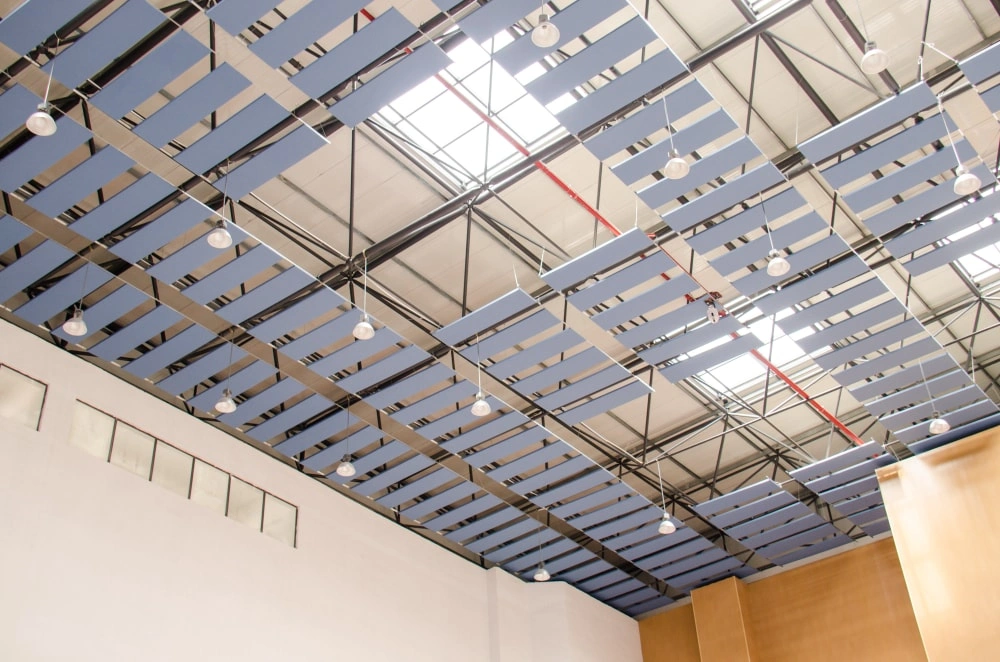
Ceiling Large-Area Sound Absorption Structures as Primary. Ceilings represent the largest continuous surface in sports arenas and the main path for sound wave reflection. Ceiling absorption treatment effectiveness typically reaches 3-5 times that of side walls. Applicable solutions include: absorptive ceiling systems (perforated metal panels + cavities + acoustic insulation materials), spatial sound absorbers (suspended absorptive panel arrays), and combined absorptive-reflective panel systems (targeting multi-functional requirements).
Side Wall Mid-High Frequency Absorption as Supplement. Side walls should primarily treat frequencies above 2000Hz, preventing flutter echoes. Recommend decorative absorptive wall panels, perforated panel absorption structures, or fabric-wrapped sound absorption systems.
Rear Wall Echo Prevention with Parallel Diffusion Treatment. Arena rear walls easily generate long-delay echoes requiring elimination through absorption or diffusion treatment. For large-span arenas, sound path differences between rear walls and main platforms can exceed 100 meters, corresponding to echo delays exceeding 200 milliseconds, severely affecting speech intelligibility.
Critical Conclusion: Without effective acoustic treatment of ceilings, sports arena reverberation times essentially cannot achieve ideal values, rendering efforts in other areas inefficient.
5.2 Reflection and Sound Focusing Control Strategies
Acoustic defects represent common “acoustic disasters” in sports arenas requiring complete prevention during design phases.
Acoustic Risks of Curved Structures. Arched roofs, circular walls, and spherical domes easily form sound focusing points, causing abnormally elevated local sound pressure levels or severe echoes. Solutions include: modifying curvature radii to avoid complete focusing arcs; arranging strong absorptive materials in focusing areas; employing diffusive structures to scatter reflected sounds.
Treatment of Parallel Large-Area Hard Reflective Surfaces. Opposing parallel walls create flutter echoes; opposing floors and ceilings produce repeated reflections. Breaking geometric symmetry requires: asymmetric treatment with absorption on one side and diffusion on the other; appropriately tilting walls or ceilings to avoid perpendicular opposition; installing absorptive or diffusive structures along critical reflection paths.
Positive Utilization of Directional Reflection. Not all reflections are harmful; reasonable early reflections can enhance direct sound and improve clarity. Through precise acoustic simulation, directional reflective surfaces can be designed to guide sound energy toward areas requiring reinforcement.
5.3 Acoustic Constraint Mechanisms for Crowd Noise
Crowd noise represents one of the largest sound sources in sports arenas and a special design challenge.
Dual Effects of Full Occupancy. When arenas reach capacity, audiences function both as strong sound sources (cheering, applauding, shouting) and absorbers (human body and clothing absorption coefficients approximately 0.4-0.5). This dual effect causes reverberation times at full capacity to shorten 30-40% compared to empty conditions.
Design Response to Dynamic Absorption. Designs must simultaneously consider empty and fully occupied extreme states, ensuring acoustic performance meets usage requirements in both conditions. Common strategies include: determining total absorption based on empty conditions, ensuring no excessive reverberation when vacant; selecting materials with moderate absorption coefficients, avoiding excessive absorption when occupied leading to dead sound fields; installing absorption treatment behind spectator seating to compensate for audience absorption when present.
Noise Superposition Suppression Design. Through reasonable acoustic zoning and directional reflection control, mutual interference from crowd noise in different areas can be reduced, maintaining relative local quietness.
5.4 Selection and Arrangement Principles for Absorptive Materials
Material Performance Requirements. Sports arena absorptive materials must simultaneously satisfy acoustic performance, fire rating, durability, aesthetics, and economic efficiency. Common materials include: perforated metal panels + glass wool (Class A fire resistance, good durability), polyester fiber absorptive panels (environmentally friendly, rich colors), micro-perforated panels (fiber-free, easy to clean), and wooden absorptive panels (aesthetic, premium).
Frequency Characteristic Matching. Different absorptive materials exhibit vastly different absorption coefficients for different frequencies. Sports arenas should prioritize mid-low frequency (250-1000Hz) reverberation control, therefore selecting materials or structures with higher absorption coefficients in these bands.
Optimized Placement Positioning. Optimize absorptive material placement positions and areas through acoustic simulation software (such as EASE, ODEON, etc.) to achieve optimal cost-performance ratios. General principles: ceiling absorption offers highest efficiency; rear wall absorption effectively eliminates echoes; upper side wall absorption reduces lateral reflections.
Part Six: Structural Noise and Impact Sound Control
This represents the essential distinction between sports arenas and ordinary public buildings, and a critical aspect easily overlooked in many design schemes.
6.1 Impact Sound Sources and Characteristics
Ball Collision Sounds. Basketball, volleyball, and other ball impacts with floors and walls produce transient high-energy impact sounds with peak sound pressure levels reaching 100-110dB.
Running, Jumping, and Trampling Impacts. Athlete running, jumping, and spectator trampling generate low-frequency impact noise transmitted to adjacent rooms through structures.
Grandstand Vibration Transmission. Large arena grandstands produce intense vibration during collective audience activities (such as stomping, jumping), forming structural noise sources.
6.2 Technical Measures for Impact Sound Control
Floating Floor Structures. Employ floating floors in competition venues and spectator areas, blocking impact sound transmission to lower spaces through elastic vibration isolation layers. Typical construction: surface layer (sports flooring or grandstand flooring), leveling layer, vibration isolation padding (rubber particle pads or elastic felt), structural floor slab.
Vibration Isolation Connection Design. Connection nodes between grandstands, walls, and other large components with main structures should employ vibration isolation connections, avoiding vibration transmission from rigid connections. Options include elastic supports, vibration isolators, and isolation joints.
Vibration Isolation Node Optimization. Equipment pipelines penetrating walls and floor slabs should reserve sufficient vibration isolation space, employing flexible filling materials for sealing to avoid forming sound bridges.
Material Selection. Flooring materials should balance athletic performance with acoustic performance, such as selecting sports wood flooring or PVC sports flooring with appropriate elasticity and absorption characteristics.
6.3 Structural Noise Transmission Path Control
Airborne and Structure-Borne Sound Decoupling. Through double-layer walls, floating floors, ceiling vibration isolation, and other structural measures, decouple airborne and structure-borne sound transmission paths, preventing mutual excitation and superposition.
Large Equipment Vibration Isolation Treatment. Large mechanical and electrical equipment such as air conditioning units and ventilation equipment must install independent vibration isolation foundations, avoiding vibration transmission to building structures.
Pipeline System Vibration Reduction and Noise Control. Duct and water pipe systems should employ flexible connections, vibration isolation hangers, damping wrapping, and other measures to reduce pipeline vibration noise.
Part Seven: Synergistic Design of Electro-Acoustic Systems and Architectural Acoustics
Architectural acoustic design and electro-acoustic system design represent complementary relationships; both must be synergistically optimized to achieve optimal results.
7.1 Correct Design Workflow
Many project failures stem fundamentally from inverted design workflows. The correct sequence should be:
Step One: Establish Architectural Acoustic Parameters. Including reverberation time, background noise, acoustic defect control, etc., creating favorable “usable sound fields” for electro-acoustic systems.
Step Two: Design Sound Reinforcement Systems. Based on architectural acoustic conditions and usage requirements, determine loudspeaker types, quantities, positions, directions, and other parameters.
Step Three: System Joint Calibration. After completing architectural acoustic treatment, perform fine-tuning of sound reinforcement systems to achieve optimal performance.
Reversing this sequence by attempting to compensate for architectural acoustic deficiencies with high-power sound reinforcement systems inevitably proves inefficient or completely unsuccessful.
7.2 Architectural Acoustic Support for Electro-Acoustic Systems
Reduced Reverberation Time. Shorter reverberation times significantly increase effective loudspeaker operating distances, reducing system power requirements.
Elimination of Acoustic Defects. Echoes, sound focusing, and other acoustic defects superimpose with amplified signals, producing unpredictable acoustic interference requiring complete elimination during architectural design phases.
Provision of Appropriate Reflection Conditions. Appropriate early reflections enhance direct sound, expanding effective loudspeaker coverage ranges. Providing directional reflective surfaces through architectural acoustic design significantly improves amplification effectiveness.
Background Noise Control. Lower background noise reduces signal-to-noise ratio requirements for sound reinforcement systems, enhancing speech intelligibility and music quality.
7.3 Acoustic Considerations in Electro-Acoustic System Design
Loudspeaker Type Selection. Large sports arenas typically employ distributed loudspeaker systems or line array loudspeaker systems. Distributed systems provide zoned coverage through multiple loudspeakers, each with shorter operating distances and minimal sound energy attenuation; line array systems form directional sound beams through coherent superposition of multiple loudspeaker units, suitable for long-distance projection.
Optimized Loudspeaker Placement. Optimize loudspeaker positions and directions based on architectural acoustic simulation results, avoiding excitation of strong reflective surfaces or acoustic defect areas.
System Delay Configuration. For distributed systems, configure appropriate delays based on distances from loudspeakers to listening points, ensuring simultaneous arrival of sounds from all loudspeakers, avoiding blurring from overlaps.
Part Eight: Acoustic Design Essentials for Auxiliary Function Spaces
Although sports arena auxiliary function spaces occupy smaller areas, they often demand higher acoustic requirements and are easily overlooked.
8.1 Referee Conference Rooms
Functional Requirements. Referee conference rooms serve pre-competition technical meetings, mid-competition disputed call discussions, etc., requiring excellent speech privacy and clarity.
Acoustic Indicators. Reverberation time should be controlled at 0.4-0.6 seconds (volumes typically under 200 m³), sound insulation from adjacent rooms should ≥45dB, background noise NC≤30.
Design Measures. Employ high sound insulation performance walls and doors/windows, comprehensive interior absorption treatment, independent fresh air systems to reduce noise.
8.2 Athlete Rest Areas
Functional Requirements. Provide quiet environments for athlete pre-competition preparation and post-competition recovery, avoiding external noise interference.
Acoustic Indicators. Sound insulation from competition venues and spectator areas should ≥50dB, background noise NC≤30, reverberation time 0.5-0.7 seconds.
Design Measures. Employ floating floors isolating impact noise, double-layer walls and sound insulation doors/windows, absorptive ceilings and wall fabric wrapping.
8.3 Media Interview Areas and Broadcasting Rooms
Functional Requirements. Media work areas require ensuring interview recording clarity and broadcast signal high quality, with extremely high sound insulation and acoustic environment requirements.
Acoustic Indicators. Sound insulation ≥55dB, background noise NC≤25, reverberation time 0.3-0.5 seconds (approaching recording studio standards).
Design Measures. Employ room-within-room sound insulation structures, professional-grade sound insulation doors/windows, full-frequency absorption treatment, independent silent air conditioning systems.
8.4 Management and Coordination Spaces
Functional Requirements. Security monitoring rooms, event command centers, and other management spaces require quiet working environments and good communication conditions.
Acoustic Indicators. Background noise NC≤35, sound insulation from adjacent spaces ≥40dB, reverberation time 0.5-0.7 seconds.
Design Measures. Reasonable functional zoning, standard sound insulation construction, moderate absorption treatment.
8.5 Modular Acoustic Space Solutions
For small to medium-sized arenas or renovation projects, consider employing modular acoustic spaces (such as acoustic isolation booths, prefabricated sound insulation rooms, etc.) offering the following advantages:
Short Construction Periods. Factory prefabrication, on-site assembly dramatically shortens timelines.
High Performance Certainty. Factory production ensures consistent construction quality and acoustic performance.
Strong Flexibility. Positions may be adjusted or disassembled for reinstallation as needed.
High Cost-Performance. Compared to site-built sound insulation rooms, comprehensive costs are lower.
Part Nine: Acoustic Simulation and Verification
9.1 Value of Computer Acoustic Simulation
Modern sports arena design must rely on professional acoustic simulation software for optimization. Mainstream software includes:
EASE (Enhanced Acoustic Simulator for Engineers). Professional acoustic design software developed by Germany’s ADA company, widely applied in sound reinforcement system design.
ODEON. Indoor acoustic simulation software developed by Denmark’s Technical University, based on hybrid geometric and wave acoustic algorithms with high precision.
CATT-Acoustic. High-precision acoustic simulation software developed in Sweden, suitable for complex architectural acoustic analysis.
9.2 Key Simulation Analysis Content
Reverberation Time Prediction. Simulate reverberation time distributions under different absorption schemes, optimizing material selection and arrangement.
Sound Pressure Level Distribution. Analyze sound reinforcement system coverage uniformity, identifying shadow zones and excessive coverage areas.
Speech Intelligibility Evaluation. Calculate full-venue STI distributions, ensuring all areas achieve target values.
Acoustic Defect Identification. Identify echo and sound focusing defect positions and intensities through impulse response analysis.
Scheme Comparison and Optimization. Compare acoustic performance and economics of different design schemes, providing decision-making bases.
9.3 Field Testing and Verification
Upon building completion, field acoustic testing must verify design objective achievement. Primary testing items include:
Reverberation Time Measurement. According to ISO 3382 standards, measure reverberation times and frequency characteristics under empty and occupied conditions.
Speech Intelligibility Testing. Using STI testing instruments or STIPA signal measurement systems, evaluate full-venue speech transmission quality.
Background Noise Measurement. Measure background noise levels and spectral characteristics in various areas under inactive conditions.
Sound Reinforcement System Performance Testing. Measure sound pressure level distribution, frequency response, coverage uniformity, and other parameters, verifying system design.
Sound Insulation Performance Detection. Conduct field sound insulation measurements on critical insulation constructions, ensuring design requirements are met.
Part Ten: Common Problems and Solutions
10.1 Excessive Reverberation Time
Problem Manifestation. Measured reverberation time exceeds design targets by 0.3 seconds or more, causing speech blurring and muddy sound.
Causal Analysis. Insufficient absorptive material area or absorption coefficients below expectations, inadequate cavity depth causing insufficient low-frequency absorption, improper material installation (such as lacking rear cavities), discrepancies between calculation models and actual buildings.
Solutions. Increase ceiling spatial sound absorber quantities and areas, supplement absorptive materials on rear and side walls, employ low-frequency traps or Helmholtz resonators strengthening low-frequency absorption, inspect and remediate non-compliant material installations.
10.2 Echo Problems
Problem Manifestation. Certain seating areas hear obvious delayed repetitive sounds, affecting speech intelligibility.
Causal Analysis. Distant walls or ceilings contain large-area hard reflective surfaces, curved structures form focused reflections, sound path differences exceed 17 meters (corresponding to 50-millisecond delays).
Solutions. Install strong absorptive materials (absorption coefficients ≥0.8) on reflective surfaces, employ convex or concave diffusive structures scattering reflections, adjust loudspeaker directions avoiding excitation of strong reflective surfaces, modify building geometries when necessary.
10.3 Non-Uniform Sound Fields
Problem Manifestation. Sound pressure levels across different areas differ by more than 6dB, or certain areas exhibit obvious sound shadows.
Causal Analysis. Unreasonable loudspeaker placement, building obstructions causing sound shadows, localized excessive absorption, acoustic defects causing uneven energy distribution.
Solutions. Optimize loudspeaker positions, quantities, and directions, add supplementary loudspeakers covering shadow zones, adjust local absorptive material arrangements, improve system performance through delay and equalization adjustments.
10.4 Low-Frequency Rumble
Problem Manifestation. Low-frequency sounds (50-200Hz) accumulate in spaces, producing rumbling or oppressive sensations.
Causal Analysis. Excessive low-frequency reverberation time (typically 1.5-2 times mid-high frequencies), spatial resonance modes, excessive sound reinforcement system low frequencies.
Solutions. Add low-frequency absorption structures (thick porous materials, membrane absorbers, perforated panel absorption), break regular spatial proportions through architectural design, adjust sound reinforcement system low-frequency equalization and crossover points.
10.5 Excessive Background Noise
Problem Manifestation. Background noise exceeds design targets during air conditioning system operation, affecting user experience.
Causal Analysis. Excessive air conditioning unit noise itself, duct system airflow noise, insufficient equipment vibration isolation, sound bridges formed at pipeline wall penetrations.
Solutions. Select low-noise air conditioning equipment, reduce duct velocities (recommend ≤5m/s), add silencers and silencing elbows, strengthen equipment vibration isolation treatment, seal all wall penetration openings.
10.6 Difficult Crowd Noise Control
Problem Manifestation. Excessive crowd noise at full capacity severely affects sound reinforcement system effectiveness.
Causal Analysis. This represents an inherent characteristic of sports arenas; complete avoidance is unrealistic.
Response Strategies. Reduce reverberation accumulation through architectural acoustic design, increase sound reinforcement system power reserves, employ highly directional loudspeakers reducing amplified signal excitation of spectator areas, guide audience quietness through visual cues during critical moments (such as referee announcements).
Part Eleven: Green Acoustics and Sustainable Design
11.1 Environmentally Friendly Material Selection
Modern sports arena acoustic design should balance environmental requirements:
Prioritize Inorganic Materials. Glass wool, rock wool, mineral wool, and other inorganic absorptive materials contain no formaldehyde or other harmful substances with good fire performance.
Promote Renewable Materials. Polyester fiber absorptive panels (PET) can be manufactured from recycled plastic bottles, being both environmentally friendly and high-performing.
Avoid Harmful Materials. Do not use acoustic materials containing asbestos, excessive formaldehyde, or other harmful substances.
Consider Full Life Cycles. Select durable, recyclable materials, reducing full life cycle environmental impacts.
11.2 Energy-Saving Design Strategies
Reduce Air Conditioning Energy Consumption. Good acoustic design can lower background noise requirements, thereby permitting more energy-efficient low-velocity wind systems.
Balance Natural Ventilation with Acoustics. In climatically suitable regions, achieve balance between natural ventilation and acoustic sound insulation through reasonable design.
Multi-Functional Space Design. Through adjustable acoustic components (such as liftable sound absorbers, reversible reflector panels, etc.), enable single spaces to adapt to multiple functions, improving space utilization rates.
Part Twelve: Future Development Trends
12.1 Active Acoustic Control Technology
Technical Principles. Generate sound waves with opposite phase to noise through loudspeaker arrays, achieving active noise cancellation.
Application Prospects. Can be used for low-frequency noise control, local quiet zone creation, etc., compensating for passive acoustic measure deficiencies.
Technical Challenges. High system complexity and costs; currently primarily used in premium projects or special areas.
12.2 Adjustable Acoustic Systems
Lifting Absorptive Curtains. Adjust absorption curtains suspended from ceilings through electric or manual means, modifying spatial reverberation times.
Rotatable Reflector Panels. Change reflector panel angles through rotation mechanisms, adjusting sound field distributions.
Variable Volume Design. Modify spatial volumes through movable partitions, adapting to different activity scales.
12.3 Intelligent Acoustic Environments
Real-Time Monitoring Systems. Install distributed acoustic sensors, real-time monitoring of acoustic parameters, providing data support for operations management.
Adaptive Sound Reinforcement Systems. Automatically adjust loudspeaker gain, delay, equalization, and other parameters based on real-time sound field parameters, maintaining optimal performance.
Digital Twin Technology. Establish sports arena digital twin models, simulating acoustic performance under different usage scenarios, guiding operational decisions.
12.4 Virtual Acoustic Technology
Wave Field Synthesis (WFS). Precisely control sound fields through numerous loudspeaker arrays, creating virtual sound sources and immersive audio experiences.
Sound Enhancement Systems. Capture natural sounds through distributed microphones, rebroadcast after processing, enhancing sound energy and clarity while maintaining naturalness.
Personalized Audio. Provide customized audio content for different areas through directional loudspeakers or personal audio devices.
Part Thirteen: Project Implementation Essentials
13.1 Design Phase Coordination and Cooperation
Integrated Architectural and Acoustic Design. Acoustic consultants should deeply participate in schematic design phases rather than waiting until construction documentation stages.
Multi-Disciplinary Collaboration. Acoustic design requires close cooperation with architecture, structure, HVAC, electrical, and other disciplines, particularly regarding ceiling spaces, equipment rooms, pipeline routing, etc.
Design Depth Requirements. Acoustic design documents should include detailed material construction, installation details, performance indicators, etc., avoiding construction phase comprehension deviations.
13.2 Construction Quality Control
Material Arrival Acceptance. All acoustic materials should provide performance testing reports; verify specifications, models, and quantities upon arrival.
Mockup First. Before large-scale construction, create mockup rooms or mockup sections first, verifying construction methods and acoustic effects.
Concealed Work Inspection. Concealed works such as rear cavities behind absorptive materials, double-layer wall filling, vibration isolation node installation, etc., must undergo strict inspection before closure.
Finished Product Protection. Acoustic materials are mostly decorative materials with fine surfaces; finished product protection should be implemented during construction and cross-work operations.
13.3 Completion Acceptance
Performance Testing. Conduct comprehensive acoustic performance testing according to design requirements and relevant standards.
Problem Remediation. Analyze causes of non-conformities discovered during testing and formulate remediation plans.
Documentation Archiving. Organize complete design documents, construction records, testing reports, and other materials, providing bases for subsequent operations and maintenance.
Part Fourteen: Typical Case Studies
14.1 National Indoor Stadium (Beijing)
Project Overview. 2008 Beijing Olympic Games handball and trampoline competition venue, accommodating 18,000 spectators.
Acoustic Challenges. Ultra-large space (volume approximately 120,000 m³), multi-functional usage requirements, existing building renovation constraints.
Design Strategies. Ceiling employs large-area perforated aluminum panel ceiling system with cavity-filled acoustic insulation; side walls use perforated wooden absorptive panels; rear walls feature strong absorption treatment preventing echoes.
Measured Results. Reverberation time 1.8 seconds (empty), 1.5 seconds (occupied), average STI value 0.52, meeting international event standards.
14.2 Mercedes-Benz Arena (Shanghai)
Project Overview. Multi-purpose sports arena accommodating 18,000 people, hosting basketball, ice hockey, concerts, and other activities.
Acoustic Features. Employs adjustable acoustic system using lifting absorptive curtains to regulate reverberation time: sports event mode RT=1.8 seconds, concert mode RT=2.5 seconds.
Technical Innovation. Intelligent acoustic control system automatically adjusts acoustic environments based on activity types; high-performance line array sound reinforcement system ensures uniform full-venue coverage.
14.3 University Sports Arena Renovation Project
Renovation Background. 20-year-old aging sports arena with reverberation time exceeding 3 seconds and extremely poor speech intelligibility.
Renovation Difficulties. Cannot modify existing building structure, cannot cease operations during renovation period, limited budget.
Solutions. Add lightweight spatial sound absorber arrays to ceiling, install absorptive fabric wrapping on rear walls, update sound reinforcement system.
Renovation Results. Reverberation time reduced to 1.9 seconds, STI improved to 0.48, high return on investment.
Conclusion: Systems Thinking is Key to Success
Sports arena acoustic design represents a complex systems engineering project involving multiple disciplines including architecture, acoustics, electro-acoustics, structural engineering, and mechanical-electrical engineering. Successful projects must possess the following elements:
Clear Objective Systems. Establish clear, quantified acoustic indicator systems at design inception.
Scientific Design Methods. Employ methods combining computer simulation with engineering experience to optimize design schemes.
Professional Team Collaboration. Close cooperation across disciplines with acoustic design participating throughout.
Strict Quality Control. Maintain strict standards at every stage from material selection to construction acceptance.
Continuous Optimization and Improvement. Continuously optimize acoustic environments through operational feedback, maintaining optimal performance.
Acoustic design is not simple material accumulation but rather profound understanding and precise control of sound propagation laws. Only with systems thinking, engineering thinking, and innovative thinking can truly excellent sports arena acoustic environments be created.
Keywords: sports arena acoustic design, reverberation time control, speech intelligibility, STI indicators, absorptive materials, sound insulation design, sound reinforcement systems, acoustic simulation, ISO 3382, architectural acoustics, structural noise, impact sound control, acoustic standards, multi-purpose sports arenas, acoustic testing
Target Audience: Architects, acoustic consultants, sports building designers, mechanical-electrical engineers, owner technical personnel, acoustic material suppliers, construction unit technical personnel
References: ISO 3382 series standards, ISO 23591, GB 50118, GB/T 14476, IEC 60268 series, relevant acoustic design manuals and engineering case collections
This article serves as a systematic technical guide for sports arena acoustic design, covering theoretical foundations, technical standards, design strategies, implementation essentials, and other aspects, aiming to provide comprehensive reference materials for acoustic design professionals. Data and recommended values in the text are based on engineering practice experience; specific projects should be adjusted and optimized according to actual conditions.
About Prodec Group
Prodec Group specializes in providing comprehensive acoustic solutions for sports arenas, auditoriums, and commercial spaces. Our expertise includes:
- Professional sound absorption materials and systems
- High-performance soundproofing solutions
- Compliance with international acoustic standards
- Custom acoustic design and consulting services
For more information about our products and services, visit www.prodecgroup.com or contact our technical team for professional acoustic consultation.le construction, create mock