
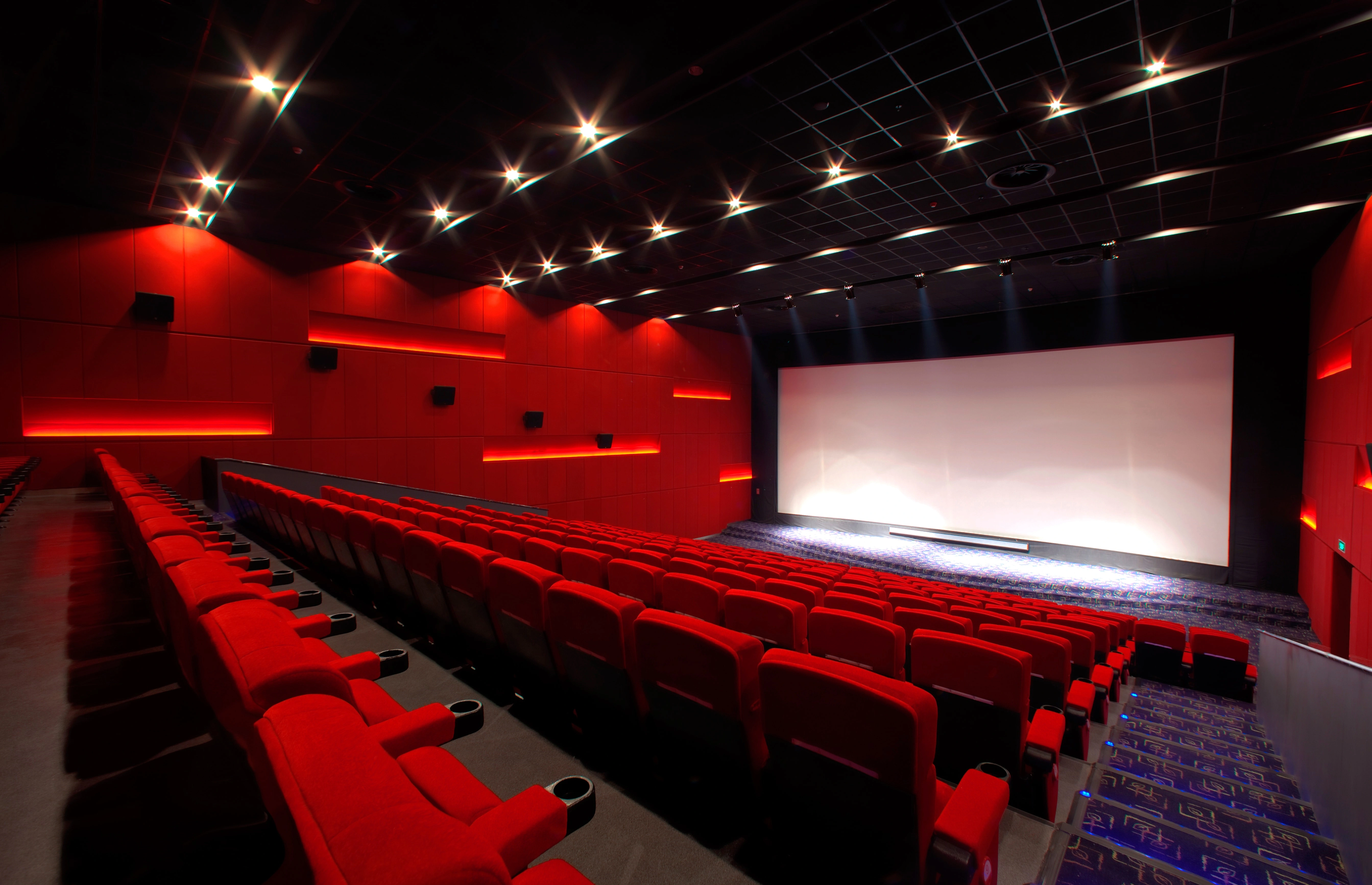
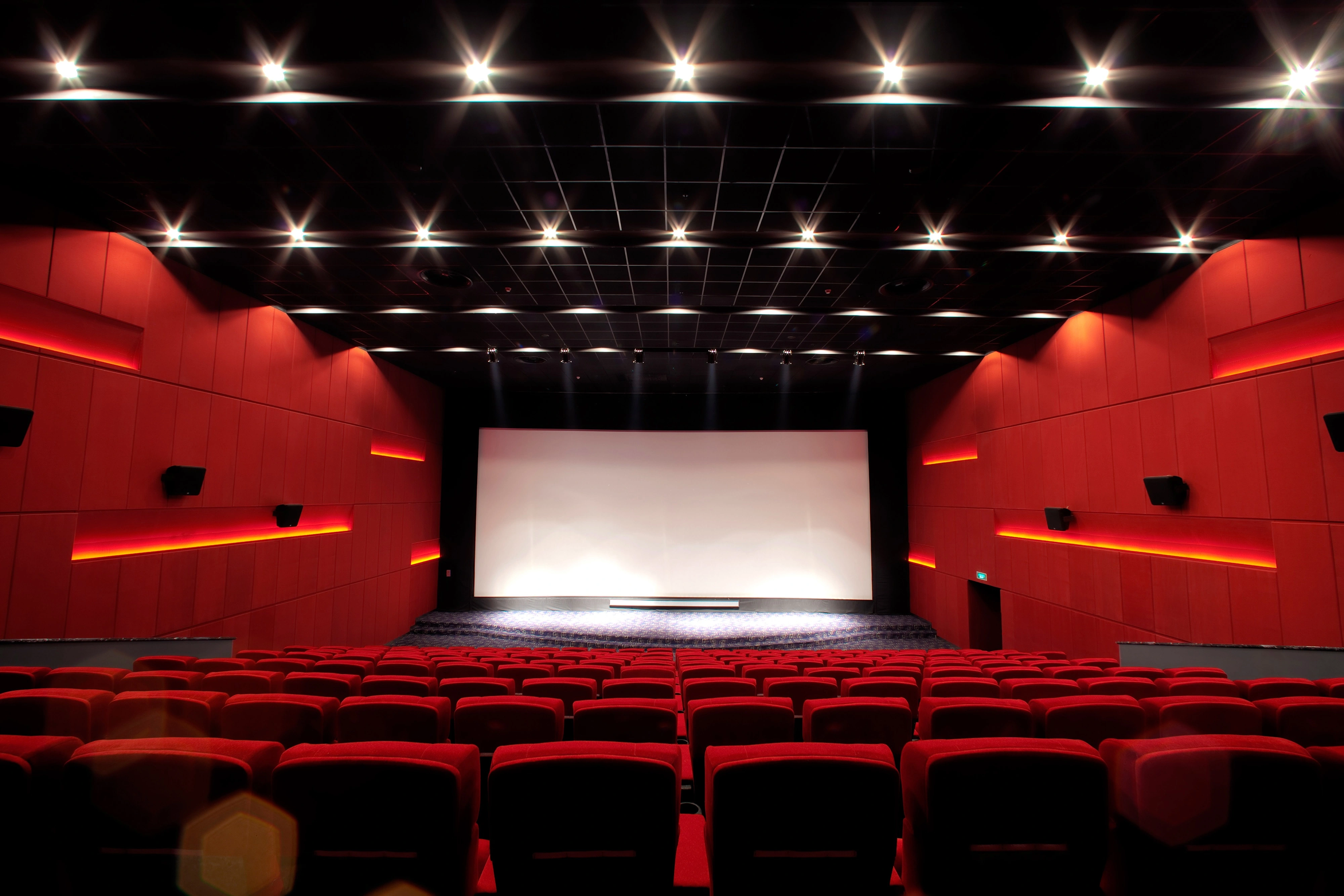
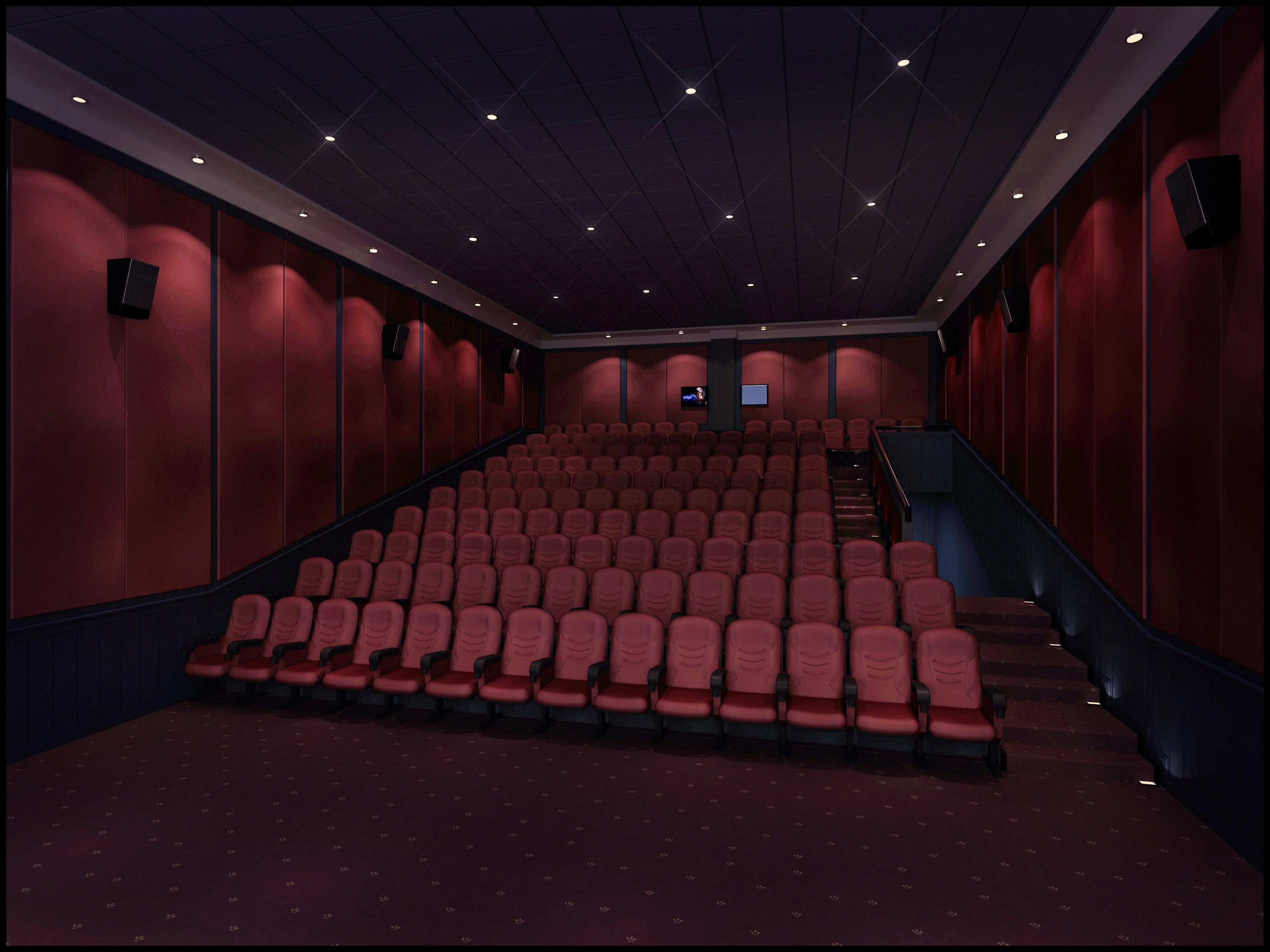
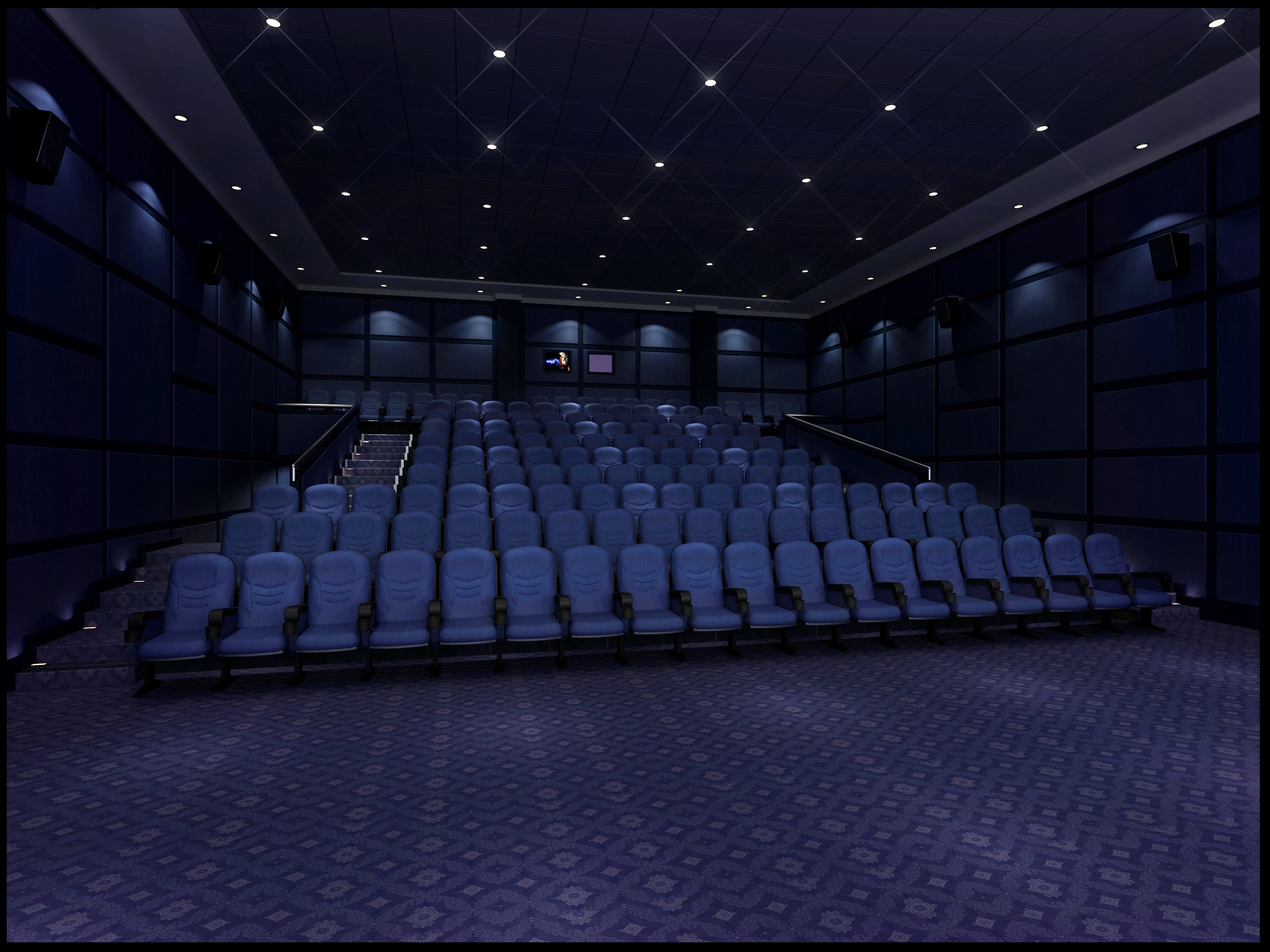
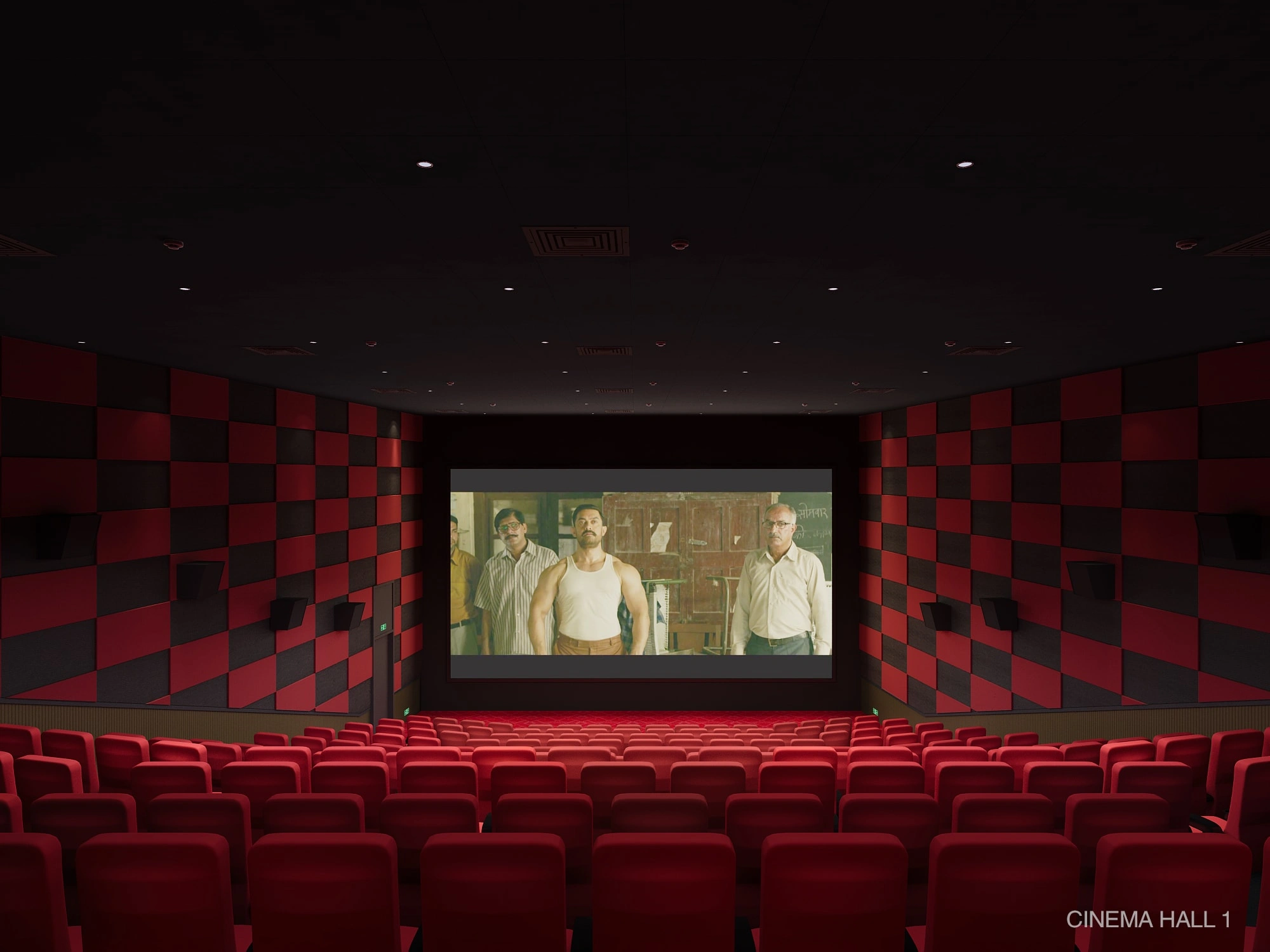
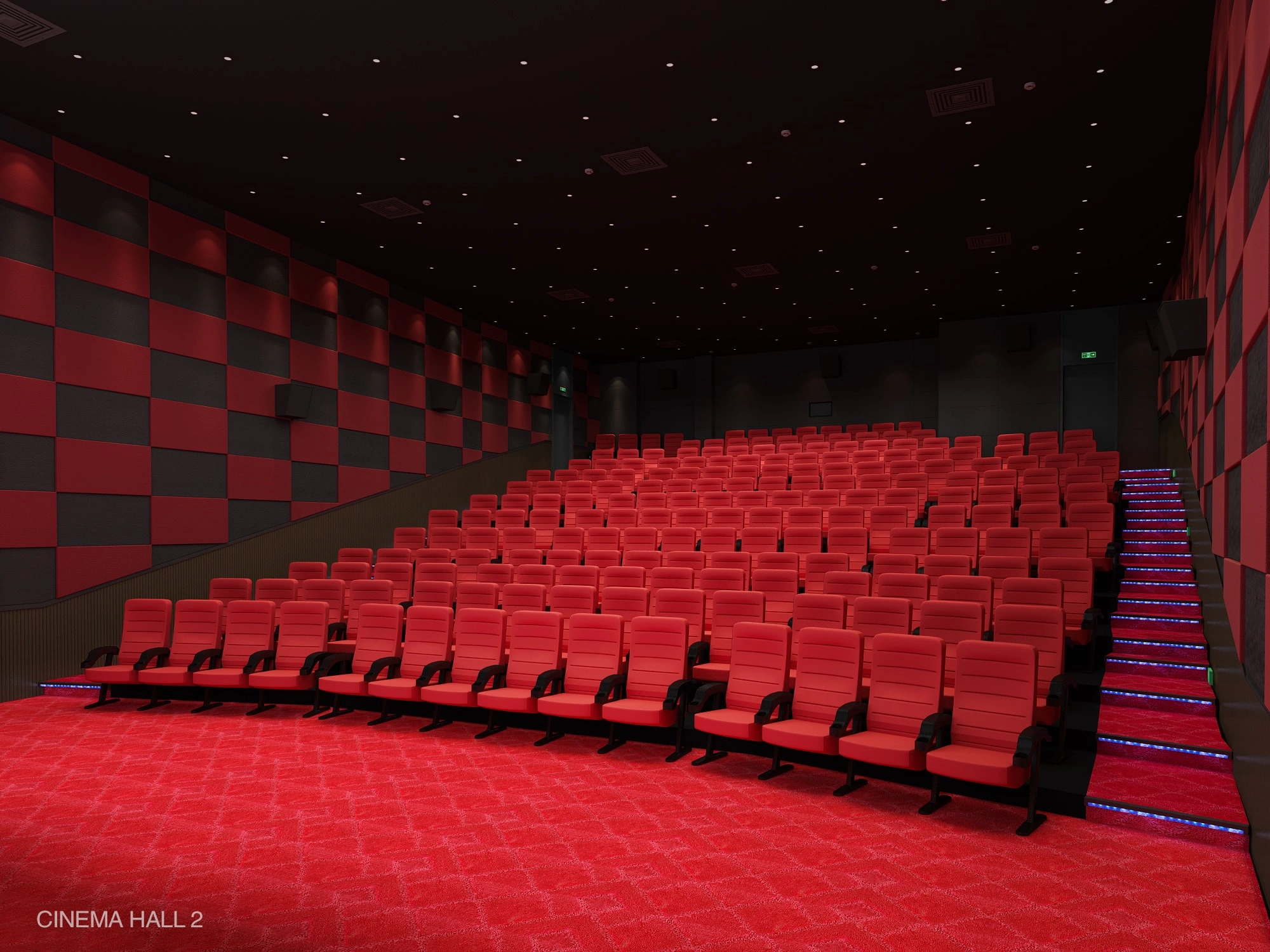
Introduction: Modern Cinema Sound Design & Acoustic Architecture Excellence
Cinema acoustic design represents a highly specialized discipline within architectural acoustics, distinctly different from concert halls, theaters, or conference facilities. Unlike traditional performance venues where live sound originates from stage sources, cinemas rely entirely on sophisticated multichannel sound reproduction systems delivering precisely calibrated audio experiences. Consequently, the acoustic environment must serve as a neutral, controlled canvas enabling accurate sound reproduction rather than enhancing or coloring the audio content.
Moreover, contemporary cinema sound systems—from traditional 5.1 surround to immersive formats like Dolby Atmos, DTS:X, and IMAX Enhanced—demand exceptionally precise acoustic control. Specifically, these advanced formats utilize numerous discrete audio channels and object-based sound positioning, requiring unprecedented uniformity in acoustic response across the entire audience area. Furthermore, cinema acoustics must simultaneously address speech intelligibility for dialogue, dynamic range for explosive action sequences, and nuanced detail for subtle sound effects.
This comprehensive guide examines cinema acoustic design from fundamental principles through practical implementation, providing architects, cinema designers, acoustic consultants, and facility developers with detailed strategies for creating world-class motion picture exhibition environments.
Part One: Understanding Cinema Acoustic Fundamentals
1.1 Core Acoustic Philosophy: Neutrality, Accuracy & Immersive Sound Reproduction
Fundamentally, cinema acoustic design pursues three primary objectives. First and foremost, the environment must provide accurate, uncolored sound reproduction. Additionally, the acoustic space must deliver uniform sonic experience regardless of seating position. Finally, the design must completely eliminate acoustic defects and external noise intrusion.
Accuracy and Neutrality: Primarily, cinema acoustics must neither enhance nor detract from the reproduced soundtrack. Therefore, the acoustic environment serves as a transparent medium rather than an active participant.
Uniformity Across Seating: Subsequently, every seat must receive essentially identical frequency response and sound pressure level. Consequently, sophisticated sound absorption strategies ensure consistent performance throughout.
Immersive Isolation: Furthermore, complete isolation from external environmental noise maintains the suspension of disbelief essential to cinematic storytelling.
1.2 Eight Critical Design Challenges in Modern Cinema Acoustics
Table 1: Cinema Acoustic Design Challenge Matrix
| Challenge | Impact Level | Primary Solution Strategy | Design Complexity | Cost Factor |
|---|---|---|---|---|
| Extremely Low RT Requirements | Critical | Extensive absorptive treatment | Moderate | Moderate-High |
| Wide Dynamic Range | Critical | Ultra-low background noise + high SPL capability | High | High |
| Multichannel Spatial Accuracy | High | Uniform absorption, minimal reflections | Moderate | Moderate |
| Screen Transparency Issues | High | High-frequency compensation, screen selection | Moderate | Moderate |
| Complete Sound Isolation | Critical | Heavy construction, decoupling | Very High | Very High |
| Bass Management | High | Subwoofer placement, room mode control | High | Moderate-High |
| Audience Self-Noise | Moderate | Balanced background noise targets | Low | Low |
| Technology Integration | High | Coordinated acoustic and AV design | High | Moderate |
Part Two: International Cinema Acoustic Standards & SMPTE Compliance Guidelines
2.1 SMPTE Standards for Motion Picture Exhibition & Audio Performance
Primarily, SMPTE standards define technical requirements for motion picture exhibition worldwide.
Table 2: SMPTE ST 202 Key Requirements Summary
| Parameter | Requirement | Measurement Method | Tolerance | Critical Notes |
|---|---|---|---|---|
| Reverberation Time | 0.3-0.8 s | ISO 3382-2 | ±20% | Mid-frequency (500-4000 Hz) |
| Background Noise | NC 30 or below | ISO 1996-2 | No exceedance | Critical for dynamic range |
| Sound Isolation | ≥65 dB between screens | ISO 140 series | Minimum | Essential for multiplexes |
| Frequency Response | ±3 dB (40-16,000 Hz) | SMPTE RP 200 | Per octave | Throughout seating |
| SPL Capability | 85 dB Leq + 20 dB headroom | SMPTE RP 200 | Minimum | 105 dB peak capability |
2.2 Immersive Audio Format Specifications: Dolby Atmos, DTS:X & IMAX Design
Table 3: Immersive Audio Format Comparison
| Format | Channels | Ceiling Speakers | Market Position | Acoustic Requirements |
|---|---|---|---|---|
| Dolby Atmos | 9.1 to 64+ | Required (min 4 zones) | Industry leader | NC ≤25, precise placement |
| DTS:X | Similar to Atmos | Required | Growing adoption | Similar to Atmos |
| IMAX Enhanced | 12.0+ | Optional | IMAX venues only | Proprietary specifications |
| Auro 3D | Height layers | Required | Limited adoption | Moderate requirements |
2.3 National & Regional Cinema Standards: International Compliance Framework
Table 4: Key National Cinema Standards
| Country/Region | Standard Code | Unique Requirements | International Alignment |
|---|---|---|---|
| China | GB/T 13501 | Chinese language optimization | Harmonized with ISO |
| Europe | EN 15566 | Enhanced isolation requirements | ISO-based with additions |
| United Kingdom | BS 7445 | Residential adjacency focus | ISO-compatible |
| Japan | JIS Z 8731 | Japanese construction methods | References ISO |
| Australia | AS 2107 | Prescriptive noise limits | ISO-compatible |
Part Three: Critical Acoustic Performance Metrics & Sound Quality Parameters
3.1 Reverberation Time Specifications & RT60 Control Strategies
Table 5: Recommended RT60 by Cinema Volume
| Cinema Volume (m³) | RT60 Mid-Frequency | Low-Frequency | High-Frequency | Application |
|---|---|---|---|---|
| < 200 | 0.25-0.35 s | 0.30-0.45 s | 0.20-0.30 s | Small screening rooms |
| 200-500 | 0.30-0.45 s | 0.35-0.55 s | 0.25-0.38 s | Boutique cinemas |
| 500-1,500 | 0.35-0.55 s | 0.40-0.70 s | 0.28-0.45 s | Standard multiplexes |
| 1,500-3,500 | 0.45-0.65 s | 0.55-0.85 s | 0.35-0.52 s | Large multiplexes |
| 3,500-8,000 | 0.55-0.75 s | 0.70-1.00 s | 0.42-0.60 s | Premium large format |
| > 8,000 | 0.60-0.80 s | 0.80-1.10 s | 0.45-0.65 s | Mega IMAX venues |
3.2 Background Noise Standards & NC Rating Requirements for Theaters
Table 6: Background Noise Criteria
| Cinema Type | Max NC | Max NR | Max dBA | Design Implications |
|---|---|---|---|---|
| Dubbing Theater | NC 20 | NR 20 | 30 | Extreme isolation, premium HVAC |
| Premium (IMAX/Dolby) | NC 25 | NR 25 | 33 | High-performance systems |
| Standard Multiplex | NC 30 | NR 30 | 38 | Balanced cost/performance |
| Economy Cinema | NC 35 | NR 35 | 42 | Baseline acceptable |
3.3 Sound Isolation Requirements & STC Ratings for Multiplex Facilities
Table 7: STC/IIC Requirements
| Separation Type | Min STC | Premium STC | Min IIC | Construction Type |
|---|---|---|---|---|
| Between Auditoriums | STC 65 | STC 70-75 | IIC 65 | Double-stud, isolation |
| Cinema to Lobby | STC 60 | STC 65-70 | IIC 60 | Heavy mass, sound locks |
| Cinema to Exterior | STC 55-70 | STC 65-75 | N/A | Context-dependent |
| Cinema to Retail | STC 65 | STC 70-75 | IIC 65 | Floating floors, isolated ceilings |
Part Four: Architectural Acoustic Design Strategies & Treatment Solutions
4.1 Room Geometry Optimization & Cinema Volume Planning
Initially, cinema geometry profoundly influences acoustic performance. Consequently, optimal room shapes balance acoustic objectives with seating capacity and sightline requirements.
Table 8: Cinema Geometry Recommendations
| Geometric Aspect | Optimal Range | Acoustic Benefit | Practical Considerations |
|---|---|---|---|
| Length:Width Ratio | 1.5:1 to 2.5:1 | Reduces standing waves | Stadium seating compatible |
| Ceiling Height | 1/6 to 1/4 of length | Volume for RT control | Projection clearance |
| Wall Angles | 3-7° from parallel | Eliminates flutter echo | Doesn’t reduce capacity significantly |
| Screen Wall Treatment | Highly absorptive | Prevents front-wall reflections | Critical for clarity |
4.2 Surface Treatment Strategy: Absorption, Reflection & Diffusion Placement
Subsequently, strategic placement of absorptive, reflective, and diffusive surfaces controls reverberation and eliminates defects.
Table 9: Surface Treatment Zones
| Zone | Treatment Type | NRC Target | Typical Materials | Acoustic Function |
|---|---|---|---|---|
| Ceiling | Absorptive | 0.80-0.95 | Acoustic tiles, fabric systems | Primary RT control |
| Front Wall (behind screen) | Highly Absorptive | ≥0.90 | Thick fiberglass panels | Eliminate screen reflections |
| Side Walls (front 2/3) | Absorptive | 0.70-0.85 | Fabric panels, perforated wood | Control lateral reflections |
| Side Walls (rear 1/3) | Absorptive | 0.85-0.95 | Thick absorption | Prevent rear reflections |
| Rear Wall | Maximum Absorption | ≥0.95 | Heavy absorption 150-300mm | Echo elimination |
| Floor | Moderate Absorption | 0.25-0.40 | Dense carpet + pad | Footfall noise, some absorption |
4.3 Acoustic Material Selection & Sound Absorption Products for Theaters
Table 10: Recommended Cinema Acoustic Materials
| Material Type | NRC Range | Applications | Fire Rating | Advantages | Considerations |
|---|---|---|---|---|---|
| Fiberglass Panels | 0.80-1.00 | Walls, ceiling | Class A | Excellent absorption | Requires facing |
| Mineral Wool | 0.75-0.95 | Behind screen, walls | Class A | Fire-safe, durable | Higher density needed |
| Polyester Fiber | 0.60-0.85 | Decorative walls | Class A | Safe, colorful | Moderate cost |
| Perforated Wood | 0.50-0.75 | Side walls | Varies | Aesthetic | Requires backing |
| Acoustic Plaster | 0.40-0.65 | Ceilings | Class A | Seamless appearance | Limited absorption |
| Fabric Systems | 0.80-0.95 | Walls, stretch ceilings | Depends | Custom appearance | Installation expertise |
Part Five: Screen Acoustic Considerations & Transparent Screen Technology
5.1 Acoustically Transparent Screen Requirements
Notably, cinema screens must allow sound passage from behind-screen loudspeakers without significant attenuation or coloration.
Table 11: Screen Perforation Specifications
| Screen Type | Perforation Pattern | Transmission Loss | HF Compensation | Applications |
|---|---|---|---|---|
| Standard Perf | 0.031″ holes, 1.38% open | -1 to -3 dB above 8kHz | +2 to +4 dB boost | Most common, cost-effective |
| Micro Perf | 0.016″ holes, 0.75% open | -2 to -4 dB above 10kHz | +3 to +5 dB boost | 4K/high-resolution projection |
| Woven | Fabric weave | Minimal above 4kHz | Minimal | Specialty applications |
5.2 Behind-Screen Acoustic Treatment & Loudspeaker Cavity Design
Furthermore, the space behind projection screens requires careful acoustic treatment to prevent reflections returning through the screen.
Treatment Strategy:
- Install absorptive panels (NRC ≥ 0.90) on wall behind screen
- Maintain minimum 1.2-2.0 meter clearance behind screen
- Treat side walls flanking screen with absorption
- Ensure loudspeakers have adequate space for proper dispersion
Part Six: Sound Isolation Design & Soundproofing Construction Methods
6.1 Wall Assembly Construction & Partition Soundproofing Systems
Initially, sound isolation between cinema auditoriums requires sophisticated wall construction strategies.
Table 12: Wall Assembly Performance
| Construction Type | Typical STC | Cost Factor | Applications | Construction Details |
|---|---|---|---|---|
| Single Stud + Insulation | STC 40-45 | 1.0x | Not recommended for cinemas | Inadequate isolation |
| Staggered Stud | STC 55-60 | 1.5x | Budget multiplexes | Acceptable minimum |
| Double Stud Independent | STC 65-70 | 2.0-2.5x | Standard multiplexes | Recommended approach |
| Double Wall + Gap | STC 70-75 | 2.5-3.0x | Premium cinemas | High performance |
| Room-in-Room | STC 75-80+ | 3.5-5.0x | Flagship venues | Ultimate isolation |
Critical Construction Details:
- Fill all cavities with acoustic insulation (mineral wool or fiberglass)
- Use multiple layers of gypsum board (typically 2-3 layers per side)
- Seal all penetrations with acoustic sealant
- Avoid any rigid connections between wall leaves
- Extend partitions to structural deck above ceiling
6.2 Floor and Ceiling Assemblies
Subsequently, vertical sound isolation prevents transmission between stacked cinema auditoriums or adjacent activities.
Table 13: Floor and Ceiling Assemblies & Vertical Sound Isolation Techniques
| Assembly Type | STC | IIC | Applications | Cost Factor |
|---|---|---|---|---|
| Concrete Slab + Isolated Ceiling | STC 55-60 | IIC 45-50 | Single-level cinemas | 1.5x |
| Concrete + Floating Floor | STC 60-65 | IIC 60-65 | Stacked cinemas | 2.0x |
| Both Floating Floor & Ceiling | STC 70-75 | IIC 70-75 | Premium stacked | 3.0x |
| Separate Structure Isolation | STC 75-80+ | IIC 75-80+ | Flagship venues | 4.0x+ |
6.3 Doors, Penetrations & Acoustic Sealing Solutions
Moreover, doors represent the weakest link in otherwise high-performance isolation assemblies.
Table 14: Door Performance Requirements
| Door Type | Min STC | Configuration | Applications | Typical Cost |
|---|---|---|---|---|
| Solid Core Single | STC 30-35 | Single leaf | Interior access only | Low |
| Solid Core Double | STC 40-45 | Two leaves, no vestibule | Non-critical separations | Moderate |
| Acoustic Rated Single | STC 45-50 | Gasketed, drop seal | Standard exit doors | Moderate-High |
| Acoustic Double with Vestibule | STC 55-60+ | Sound lock entry | Primary cinema entries | High |
Part Seven: HVAC Noise Control & Mechanical System Design for Quiet Operation
7.1 System Design Philosophy & Background Noise Reduction Strategies
Importantly, HVAC systems represent the dominant background noise source in most cinemas. Consequently, comprehensive noise control strategies must address multiple aspects simultaneously.
Table 15: HVAC Noise Control Hierarchy
| Control Tier | Strategy | Implementation | Effectiveness | Cost Impact |
|---|---|---|---|---|
| Tier 1 – Source | Ultra-quiet equipment selection | Oversized, slow-speed | Highly effective | Moderate |
| Tier 2 – Path | Low velocity distribution | Large ducts, <4 m/s | Very effective | Moderate-High |
| Tier 3 – Attenuation | Silencers and lining | Strategic placement | Effective | Moderate |
| Tier 4 – Isolation | Vibration isolation | Resilient mounts | Effective for LF | Low-Moderate |
| Tier 5 – Terminal | Low-NC diffusers | Careful selection | Moderately effective | Low |
7.2Critical Design Parameters & Ventilation System Specifications
Target Performance Values:
- Maximum supply velocity: 3-4 m/s in main ducts, 2-3 m/s at terminals
- Silencer insertion loss: 20-30 dB at problem frequencies
- Minimum duct lining: 25mm in supply/return
- Equipment vibration isolation: ≥95% efficiency
Part Eight: Specialized Cinema Types & Premium Format Acoustic Design
8.1 Premium Large Format (PLF) Cinemas: IMAX, Dolby Cinema & Enhanced Audio
Table 16: PLF Cinema Acoustic Specifications
| Parameter | Standard Cinema | PLF Cinema | Enhancement Factor | Technical Requirement |
|---|---|---|---|---|
| Reverberation Time | 0.4-0.6 s | 0.5-0.7 s | Slightly longer acceptable | Enhanced bass warmth |
| Background Noise | NC 30 | NC 25 | 5 NC points lower | Ultra-quiet HVAC |
| Sound Isolation | STC 65 | STC 70-75 | Higher performance | Prevents intrusion |
| SPL Capability | 105 dB | 110+ dB | +5 dB minimum | Explosive action scenes |
8.2 Boutique and Luxury Cinemas: High-End Theater Acoustic Solutions
Conversely, boutique cinemas prioritize intimate, luxurious experience with enhanced comfort and acoustic refinement.
Acoustic Priorities:
- Very low background noise (NC 25 or better)
- Shorter reverberation time (0.3-0.4 s) for clarity
- Premium acoustic materials with luxury finishes
- Enhanced sound isolation for privacy
8.3 IMAX Theaters: Large-Screen Cinema Acoustic Engineering
Similarly, IMAX venues demand specialized acoustic design accommodating proprietary audio systems and massive screens.
IMAX-Specific Requirements:
- Proprietary 12-channel configuration
- Extended low-frequency response to 23 Hz
- Exceptional dynamic range capability
- Precise acoustic calibration protocols
Part Nine: Common Acoustic Problems and Solutions
9.1 Problem Resolution Matrix & Acoustic Defect Correction
Table 17: Common Cinema Acoustic Issues
| Problem | Symptoms | Root Causes | Solutions | Prevention |
|---|---|---|---|---|
| Excessive RT | Muddy dialogue, unclear sound | Insufficient absorption | Add ceiling/wall panels | Adequate treatment from design |
| Background Noise | Audible HVAC, external noise | High velocity, poor isolation | Reduce velocity, enhance isolation | Proper system sizing |
| Cross-Talk Between Screens | Adjacent soundtrack audible | Inadequate isolation | Enhance wall/ceiling assemblies | STC 65+ construction |
| Uneven Frequency Response | Tonal imbalance | Inadequate absorption distribution | Balance treatment | Full-spectrum absorption |
| Screen Reflections | Echo, comb filtering | Inadequate behind-screen treatment | Install absorption behind screen | Treat from design |
| Flutter Echo | Metallic ringing | Parallel hard surfaces | Absorb or angle surfaces | Non-parallel geometry |
Part Ten: Testing, Commissioning & Performance Verification Procedures
10.1 Comprehensive Testing Protocol & Acoustic Measurement Standards
Table 18: Required Acoustic Tests
| Test Category | Parameters | Standard | Positions | Acceptance |
|---|---|---|---|---|
| Reverberation | RT60, T20, T30 | ISO 3382-2 | 6-12 points | Within spec ±15% |
| Background Noise | NC, NR, dBA | ISO 1996-2 | 6-12 points | Below maximum |
| Sound Isolation | STC, ASTC | ASTM E336 | Partitions | Meets specification |
| Frequency Response | 1/3 octave | SMPTE RP 200 | All seats | ±3 dB 40-16kHz |
| SPL Capability | Peak and Leq | SMPTE RP 200 | Reference | 85 dB + 20 dB |
Conclusion: Excellence Through Precision in Cinema Acoustic Engineering
In conclusion, world-class cinema acoustic design demands meticulous attention to detail, rigorous adherence to standards, and seamless integration of architectural and electro-acoustic systems. Specifically, success requires:
Technical Precision: Meeting quantified SMPTE and ISO standards throughout Material Quality: Specifying proven acoustic materials and isolation systems System Integration: Coordinating acoustic treatment with sound system requirements Quality Verification: Comprehensive testing validating design achievement
Ultimately, exceptional cinema acoustics create immersive experiences that transport audiences into filmmakers’ creative visions, justifying the investment through patron satisfaction and repeat attendance.