
If you’ve ever searched for soundproofing vs. absorption or wondered, “Does acoustic foam actually soundproof?” you’re not alone. Many people confuse sound absorption—which reduces echo inside a room—with soundproofing, the process of blocking noise from passing through walls or ceilings. Understanding the crucial difference between these two can save you from wasted time, money, and frustration. In this post, we’ll cut through the noise, clear up this common misconception, and help you make informed choices to improve your home, office, or studio acoustics the right way.
Defining the Basics: What Is Soundproofing?
Soundproofing is all about preventing sound from passing through barriers like walls, floors, and ceilings. It works by adding mass, decoupling surfaces, and sealing gaps to block noise effectively. This process creates dense, heavy barriers that stop both airborne sounds (like voices and traffic) and impact noise (such as footsteps or banging).
Here’s how it works in simple terms:
- Mass: Adding heavy materials increases density, making it harder for sound waves to penetrate.
- Decoupling: Separating layers (like double drywall with a gap) reduces vibration transfer.
- Sealing: Closing cracks and gaps prevents sound leaks that can bypass barriers.
A key measure of soundproofing performance is the Sound Transmission Class (STC) rating. The higher the STC, the better a material is at blocking sound.
You’ll often need soundproofing in everyday scenarios such as:
- Stopping noisy neighbors from disturbing your peace
- Reducing traffic noise from outside
- Enhancing privacy in places like conference rooms or bedrooms
Choosing the right soundproof materials and design steps can dramatically improve noise isolation, making your space quieter and more comfortable.
Defining the Basics: What Is Sound Absorption?
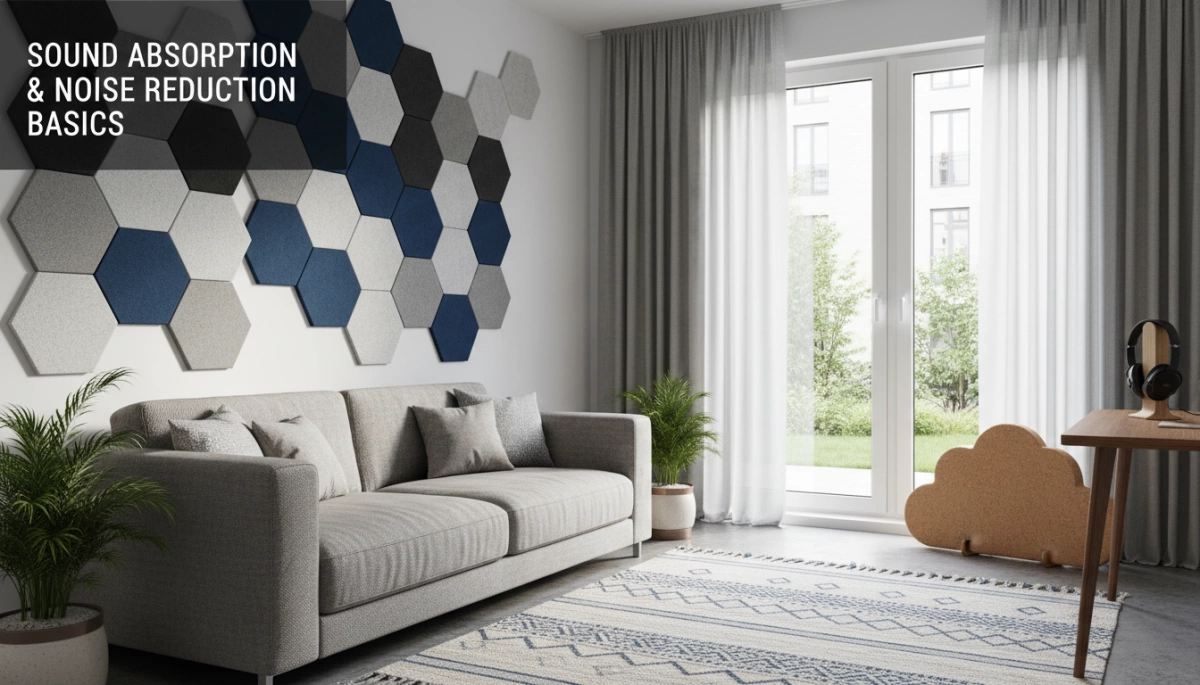
Sound absorption focuses on reducing sound reflections and reverberation inside a room by turning sound energy into heat. Unlike soundproofing, which blocks sound from passing through walls, sound absorption helps improve the internal acoustics by trapping sound waves.
This happens because porous absorbers like acoustic panels, fabric-wrapped panels, and bass traps capture the noise, preventing echoes and reducing the buildup of internal noise. By controlling reverberation, sound absorption enhances speech intelligibility and creates a clearer, more comfortable sound environment.
The effectiveness of sound absorption is measured by the Noise Reduction Coefficient (NRC) rating, which tells you how much sound a material can absorb. Higher NRC values mean better absorption.
You’ll see sound absorption materials used in places where echo is a problem or speech clarity is essential — think open offices, busy restaurants with poor speech intelligibility, and home theaters where muddy sound needs clearing up. Products like Prodec Acoustic Solution’s acoustic panel and acoustic wall panel lines are designed specifically to tackle these challenges efficiently.
For those interested in integrating sound absorption with suspended ceilings, check out Perforated Acoustic Panels which combine functionality and design for room acoustics improvement.
The Biggest Misconception: Why Absorption Isn\’t Soundproofing
A common mistake is thinking that sound absorption equals soundproofing. Acoustic panels or foam are great at reducing echo and controlling reverberation inside a room, but they don’t stop sound from traveling through walls. For example, installing wall panels can improve room clarity but won’t block noisy neighbors or keep your music from bothering others.
This confusion often comes from marketing terms like “soundproof panels” and the way many sound absorption products look similar to soundproofing materials. Because of this mix-up, people sometimes spend money on products that don’t deliver the sound blocking they expect, resulting in wasted effort and frustration.
To really stop noise transmission, you need dedicated soundproofing materials—not just porous absorbers. For effective acoustic treatment, it’s important to understand this key difference before making a decision.
Key Differences at a Glance
Here\’s a quick side-by-side comparison to clear up the main differences between soundproofing and sound absorption:
| Aspect | Soundproofing | Sound Absorption |
|---|---|---|
| Purpose | Blocks sound transmission through walls/floors | Reduces echoes and reverberation inside a room |
| Materials | Dense, heavy (e.g., mass-loaded vinyl, double drywall) | Porous, soft (e.g., acoustic panels, fabric-wrapped panels) |
| Installation | Structural changes: adding mass, decoupling, sealing gaps | Surface-mounted panels, ceiling clouds, bass traps |
| Cost & Complexity | Higher cost, more complex to install | Generally lower cost, easier DIY installation |
| Effective Against | External noise like traffic, noisy neighbors | Internal noise like echo, speech muddiness, reverberation |
Understanding these differences ensures you pick the right solution—whether you need to block noise from outside or improve your room’s audio clarity.
For a clearer understanding of materials specifically designed to reduce echoes, check out our range of acoustic panels designed for sound absorption.
Materials and Products: What Works for Each
When tackling noise issues, choosing the right materials is crucial because soundproofing and sound absorption serve different purposes.
Soundproofing materials focus on blocking sound from passing through walls, floors, and ceilings. These include:
- Mass-loaded vinyl (MLV): A dense, flexible barrier that adds mass and blocks airborne noise.
- Resilient channels: Metal strips that decouple drywall from framing, reducing vibration and impact noise.
- Double drywall: Adding extra layers of drywall improves density and sound blocking.
- Acoustic sealants: Flexible caulks that seal gaps where sound could leak.
For sound absorption, materials aim to reduce echoes and reverberation inside a room. Common options are:
- Acoustic panels: Porous panels that trap sound waves, improving clarity. Prodec Acoustic Solution offers high-quality acoustic panels, sound absorption panels, and acoustic wall panels designed specifically for this purpose.
- Fabric-wrapped panels: Soft covered panels that absorb mid to high frequencies.
- Bass traps: Specialized absorbers placed in corners to control low-frequency buildup.
- Ceiling clouds: Suspended panels that reduce overhead reflections.
There are also hybrid products that combine soundproofing and absorption materials to provide comprehensive acoustic control—ideal for studios or professional environments needing both noise isolation and room clarity.
For tailored solutions, exploring Prodec Acoustic Solution’s range can help you find the perfect blend of soundproofing materials and acoustic panels suited to your space and needs. Learn more about effective acoustic panels and wall solutions to enhance your room\’s sound environment.
When to Choose Soundproofing, Absorption, or Both
Choosing between soundproofing and sound absorption depends on your specific noise problem. Here’s a quick guide:
| Solution | Best For | Examples | Why It Works |
|---|---|---|---|
| Soundproofing | Blocking external noise, privacy | Therapy rooms, apartments, offices | Adds mass and seals gaps to stop sound travel |
| Sound Absorption | Improving internal acoustics | Gyms, classrooms, restaurants | Reduces echo and reverberation inside the room |
| Both Combined | High-performance noise control | Recording studios, modern offices, home cinemas | Absorption tames echo, making soundproofing more effective |
Quick Tips to Assess Your Needs:
- External noise issues? Focus on soundproofing to block unwanted sounds like traffic or neighbors.
- Echo and clarity problems inside? Absorption materials improve speech intelligibility and reduce muddiness.
- Both problems? Use a hybrid approach combining soundproof materials with acoustic panels for best results.
For tailored solutions that meet both soundproofing and sound absorption needs, exploring specialized acoustic panels and treatments can make all the difference. You might want to check our detailed options on sound absorption panels for ideas on improving your room’s internal acoustics.
Real-World Applications and Case Studies
When it comes to real-life use, soundproofing and sound absorption play different but often complementary roles. At home, soundproofing is your best bet for reducing noisy neighbors or street sounds, keeping your space quiet and private. On the other hand, sound absorption improves clarity during home office calls by cutting down echo and reverberation, making speech easier to understand.
In commercial settings like conference rooms, combining soundproofing and sound absorption creates a private environment and enhances speech intelligibility. Restaurants benefit from sound absorption panels to reduce the overall din, preventing the space from becoming overwhelming.
For professional studios, isolation booths rely heavily on soundproofing materials to block external noise, while internal acoustic treatment with absorbers like bass traps and acoustic panels refines the room acoustics for better sound quality.
Prodec Acoustic Solution has successfully worked on projects across these areas, providing tailored acoustic panels and soundproofing materials that meet both noise isolation and reverberation control needs. Their range of acoustic wall panels and sound absorption panels are ideal for creating balanced environments whether it’s home, commercial, or studio use. You can explore their versatile polyester acoustic panels for efficient echo reduction and noise control that fits your specific space.
For more about effective acoustic treatments fit for offices or studio spaces, check out Prodec’s custom acoustic panels designed to tackle both noise reduction and room clarity.
How to Get Started: Professional Advice and Solutions
When tackling soundproofing or sound absorption, DIY efforts often fall short. Without the right materials or techniques, you might spend money and still face noise issues. That’s where expert consultation helps—professionals from Prodec Acoustic Solution can assess your space, identify the real problem, and recommend tailored soundproofing materials or acoustic panels that work.
Why Choose Professional Advice?
| DIY Limitations | Benefits of Expert Consultation |
|---|---|
| Guesswork about materials | Accurate noise analysis using sound transmission class and noise reduction coefficient metrics |
| Incorrect installation | Proper fitting of soundproof panels, sealants, and bass traps |
| One-size-fits-all solutions | Custom plans addressing your specific noise challenges |
| Wasted budget on ineffective products | Efficient use of proven materials like mass-loaded vinyl and fabric-wrapped acoustic panels |
Prodec Acoustic Solution offers a range of acoustic wall panels and sound absorption panels sourced for quality and effectiveness, designed to meet diverse needs from home offices to professional studios. Expert advice ensures you achieve real noise isolation and improved room acoustics without guesswork.
Ready to improve your space? Contact Prodec Acoustic Solution for a free acoustic assessment or explore our sound absorption panels and other specialized products designed for both soundproofing and absorption needs.